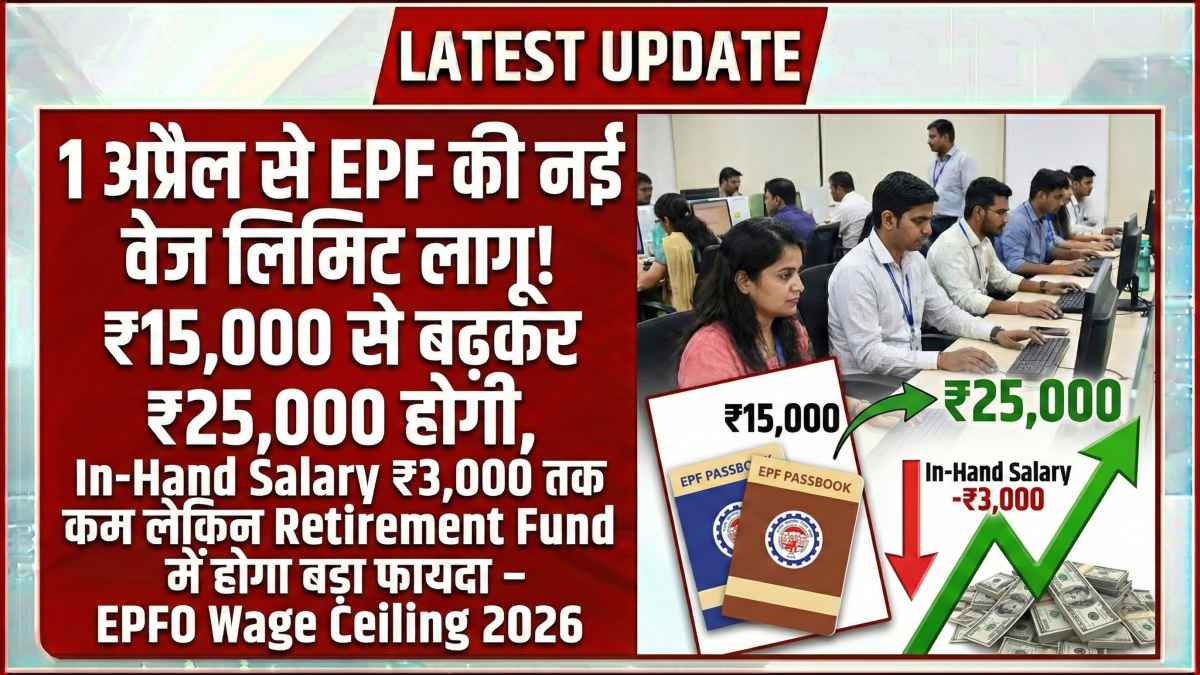
केंद्र सरकार 1 अप्रैल 2026 से कर्मचारी भविष्य निधि संगठन (EPFO) की वेज लिमिट में बड़ा बदलाव करने जा रही है। मौजूदा ₹15,000 की वेज सीलिंग को बढ़ाकर ₹25,000 प्रति माह किया जाएगा, जो 2014 के बाद पहली बार होने वाला revision है। यह फैसला Supreme Court के निर्देश के बाद लिया गया है, जिसमें court ने कहा था कि पुरानी वेज लिमिट के कारण लाखों कर्मचारी social security benefits से वंचित रह रहे हैं। नई सीलिंग लागू होने के बाद ₹15,000 से ₹25,000 के बीच वेतन पाने वाले 1 करोड़ से ज्यादा कर्मचारियों को अनिवार्य रूप से EPF में योगदान देना होगा, जिससे उनकी in-hand salary कम होगी लेकिन retirement fund मजबूत बनेगा।
Thank you for reading this post, don't forget to subscribe!मैंने कई कंपनियों में कर्मचारियों से बात की है जो ₹16,000-₹20,000 basic salary पर काम कर रहे हैं। वर्तमान में उनका PF contribution सिर्फ ₹15,000 पर calculate होता है, बाकी salary पर नहीं। इससे उनका retirement corpus उतना नहीं बन पाता जितना बनना चाहिए। महंगाई बढ़ी, salaries बढ़ीं, लेकिन EPF का wage ceiling 12 साल से stuck था। अब नई लिमिट से युवा कर्मचारियों को तो monthly deduction ज्यादा लगेगा, लेकिन 25-30 साल बाद retirement के समय उनके पास मोटा fund होगा। यह short-term pain लेकिन long-term gain का perfect example है।
Also Read



EPF Wage Ceiling क्या है – समझें आसान भाषा में
Current System (1 सितंबर 2014 से):
- EPF contribution अनिवार्य है सिर्फ उन employees के लिए जिनकी basic salary + DA ≤ ₹15,000 प्रति माह
- Contribution rate: Employee और employer दोनों 12% each
- ₹15,000 से ज्यादा basic वाले employees voluntarily join कर सकते हैं या नहीं भी
New System (1 अप्रैल 2026 से – Proposed):
- EPF contribution अनिवार्य होगा ₹25,000 तक basic salary वालों के लिए
- Contribution rate: वही 12% + 12%
- ₹15,000-₹25,000 के बीच वाले employees अब compulsory PF में आएंगे
Example से समझें:
Case 1: Basic Salary ₹12,000 (कोई बदलाव नहीं)
- पहले भी PF mandatory था, अब भी रहेगा
- Employee contribution: 12% of ₹12,000 = ₹1,440/month
- Employer contribution: ₹1,440/month
Case 2: Basic Salary ₹18,000 (बड़ा बदलाव)
Old System (till March 2026):
- PF optional था
- अगर join किया तो contribution ₹15,000 पर ही (not ₹18,000)
- Employee: 12% of ₹15,000 = ₹1,800
- Employer: ₹1,800
New System (from April 2026):
- PF अब mandatory होगा
- Contribution full ₹18,000 पर calculate
- Employee: 12% of ₹18,000 = ₹2,160 (₹360 ज्यादा)
- Employer: ₹2,160
- Monthly extra deduction: ₹360
Case 3: Basic Salary ₹23,000
New System में:
- पूरी ₹23,000 पर PF कटेगा
- Employee contribution: ₹2,760/month
- अगर पहले PF नहीं था या ₹15,000 पर था, तो अब ₹960-2,760 extra deduction
यही वो change है जो लाखों कर्मचारियों की monthly salary को impact करेगा।
In-Hand Salary पर कितना असर – Calculation के साथ
यह सबसे बड़ा सवाल है – मेरी in-hand salary कितनी कम होगी?
Scenario 1: CTC ₹4.8 LPA, Basic ₹20,000/month
Current (till March 2026):
- PF contribution on ₹15,000
- Employee PF: ₹1,800
- Employer PF: ₹1,800
- In-hand (approximate): ₹32,000
From April 2026:
- PF contribution on full ₹20,000
- Employee PF: ₹2,400
- Employer PF: ₹2,400
- Extra deduction: ₹600
- New in-hand: ₹31,400
Monthly loss: ₹600 Yearly loss: ₹7,200
Scenario 2: CTC ₹7.2 LPA, Basic ₹30,000
Current:
- Voluntary PF on ₹15,000 (ya no PF)
- Let’s assume PF on ₹15,000
- Employee: ₹1,800
From April 2026:
- Mandatory PF on ₹25,000 (ceiling limit)
- Employee: ₹3,000
- Extra deduction: ₹1,200
Monthly loss: ₹1,200 Yearly loss: ₹14,400
Scenario 3: CTC ₹10 LPA, Basic ₹40,000+
Impact:
- Ceiling ₹25,000 पर ही PF कटेगा
- Max deduction: ₹3,000 (employee share)
- अगर पहले से ₹15,000 पर था: Extra ₹1,200/month
- अगर पहले voluntary full basic पर था: कोई फर्क नहीं
Overall Impact Summary:
| Salary Range (CTC) | Monthly In-Hand Loss | Yearly Loss |
|---|---|---|
| ₹3-5 LPA | ₹300-800 | ₹3,600-9,600 |
| ₹5-8 LPA | ₹800-1,500 | ₹9,600-18,000 |
| ₹8-12 LPA | ₹1,200-2,000 | ₹14,400-24,000 |
| ₹12+ LPA | ₹1,200-1,800 | ₹14,400-21,600 |
ध्यान दें: यह loss सिर्फ employee के share का है। Employer का contribution भी बढ़ेगा जो directly आपकी in-hand से नहीं कटता, लेकिन future PF में जाता है।
Retirement Fund में कितना फायदा होगा
अब positive side देखते हैं – retirement के समय कितना मिलेगा?
Example: 30 साल का Employee, Basic ₹20,000
Old System (PF on ₹15,000):
- Monthly total contribution: ₹3,600 (employee ₹1,800 + employer ₹1,800)
- Yearly: ₹43,200
- 28 साल (58 age तक) compound @ 8.25% interest
- Final corpus (approx): ₹48-50 लाख
New System (PF on ₹20,000):
- Monthly total contribution: ₹4,800 (employee ₹2,400 + employer ₹2,400)
- Yearly: ₹57,600
- 28 साल compound @ 8.25%
- Final corpus (approx): ₹64-66 लाख
Extra benefit at retirement: ₹14-16 लाख!
यह सिर्फ एक basic ₹20,000 पर calculation है। अगर increments भी consider करें तो final amount और ज्यादा होगा।
₹23,000 Basic के लिए:
- Old system (₹15,000 ceiling): ₹48-50 लाख (28 years)
- New system (₹23,000 full): ₹73-76 लाख
- Extra: ₹23-26 लाख
यह है असली game-changer!
EPS (Employees’ Pension Scheme) में भी बढ़ोतरी
Employer के 12% contribution का breakdown:
- 8.33% → EPS (Pension)
- 3.67% → EPF
Current EPS contribution (₹15,000 ceiling):
- 8.33% of ₹15,000 = ₹1,249/month
- यह amount pension fund में जाता है
New EPS contribution (₹25,000 ceiling):
- 8.33% of ₹25,000 = ₹2,082/month
- ₹833 प्रति माह ज्यादा pension fund में
Pension पर Impact:
EPS pension formula: Pension = (Pensionable Salary × Service Years) / 70
Example: 30 years service
Old system:
- Pensionable salary (last 60 months average): approx ₹15,000
- Pension = (₹15,000 × 30) / 70 = ₹6,428/month
New system:
- Pensionable salary: approx ₹25,000
- Pension = (₹25,000 × 30) / 70 = ₹10,714/month
₹4,286 per month ज्यादा pension!
Retirement के बाद lifetime के लिए यह extra income मिलेगी।
1 करोड़ से ज्यादा Employees होंगे Affected
Labour Ministry के internal assessment के मुताबिक:
Coverage Expansion:
- Current EPFO members: लगभग 7.6 करोड़
- New members (after ceiling hike): +1 करोड़ से ज्यादा
- Total corpus में increase: ₹20,000-25,000 करोड़ annually
किन लोगों पर सबसे ज्यादा असर:
- IT/ITES sector के junior employees
- Manufacturing units के skilled workers
- Banking और insurance के entry-level staff
- Retail और hospitality के supervisors
- Small-medium companies के mid-level employees
Metro Cities में Impact ज्यादा:
Delhi, Mumbai, Bangalore, Hyderabad जैसे शहरों में ₹18,000-25,000 basic salary बहुत common है। यहां लाखों employees affected होंगे।
Supreme Court का Order – क्यों जरूरी था यह बदलाव
Supreme Court ने government को 4 महीने का deadline दिया था EPF wage ceiling review करने के लिए।
Court की टिप्पणी:
- “2014 से ₹15,000 की limit outdated हो चुकी है”
- “Inflation और salary growth के साथ ceiling भी बढ़नी चाहिए”
- “Lakhs of workers social security से excluded हो रहे हैं”
- “यह exclusionary practice है जो stop होनी चाहिए”
Public Interest Litigation (PIL):
Trade unions ने PIL file की थी जिसमें demand थी:
- Wage ceiling को ₹21,000-30,000 तक बढ़ाया जाए
- हर 3-4 साल में automatic revision हो
- DA के साथ link किया जाए
Government का Response:
Ministry of Labour ने कहा:
- ₹25,000 ceiling practical और implementable है
- Industry से consultation किया गया है
- Phased implementation होगा
- EPFO Central Board of Trustees (CBT) next meeting में approve करेगा
Employers पर भी होगा Financial Burden
यह change सिर्फ employees को affect नहीं करेगा, employers को भी।
Employer का Extra Cost:
अगर किसी company में 100 employees हैं जिनकी average basic ₹20,000 है:
Current cost (PF on ₹15,000):
- 100 × ₹1,800 × 12 months = ₹21.6 लाख/year
New cost (PF on ₹20,000):
- 100 × ₹2,400 × 12 months = ₹28.8 लाख/year
Extra annual cost: ₹7.2 लाख
Industry Bodies की Concerns:
- Confederation of Indian Industry (CII): “Contribution rate भी reduce करना चाहिए”
- Federation of Indian Chambers of Commerce & Industry (FICCI): “Ceiling hike acceptable, but compliance cost high”
- All India Manufacturers’ Organisation (AIMO): “Small businesses को relief package चाहिए”
Government की Planning:
- MSMEs को compliance में help
- Digital integration से paperwork कम
- Grace period for adjustment
New Labour Codes का Combined Effect
EPF ceiling hike अकेला नहीं आ रहा। New Labour Codes भी 21 नवंबर 2025 से लागू हो चुके हैं।
Code on Wages का 50% Rule:
- Basic + DA कम से कम CTC का 50% होना चाहिए
- Allowances maximum 50% तक ही
Double Impact:
पहले companies Basic को 20-30% रखती थीं, बाकी allowances में देती थीं। अब:
- Basic minimum 50% होगा (Labour Code)
- उस higher basic पर PF कटेगा (EPF ceiling hike)
Result: और ज्यादा deductions!
Example:
CTC ₹6 लाख, पहले:
- Basic: ₹15,000 (30%)
- Allowances: ₹35,000 (70%)
- PF on ₹15,000 = ₹1,800
CTC ₹6 लाख, अब:
- Basic: ₹25,000 (50% of ₹50,000 monthly)
- Allowances: ₹25,000
- PF on ₹25,000 = ₹3,000
Monthly extra cut: ₹1,200
यह combined effect 3-5% तक in-hand reduce कर सकता है।
ESIC Wage Ceiling में भी Hike की संभावना
Employees’ State Insurance Corporation (ESIC) की wage ceiling भी ₹21,000 से बढ़कर ₹30,000 हो सकती है।
ESIC Benefits:
- Medical care (खुद और family के लिए)
- Sickness benefit
- Maternity benefit
- Disability pension
- Dependent benefit
Current ESIC Contribution:
- Employee: 0.75% of wages
- Employer: 3.25% of wages
Impact अगर ESIC ceiling ₹30,000 हो:
- ₹28,000 basic वाले employee को ESIC में भी contribute करना होगा
- Employee share: 0.75% of ₹28,000 = ₹210/month
- पहले अगर ESIC नहीं था तो यह नया deduction होगा
हालांकि ESIC benefits अच्छे हैं, लेकिन in-hand salary और कम होगी।
किन Employees को सबसे ज्यादा Benefit
हर किसी को equal benefit नहीं होगा। Maximum फायदा:
Group 1: Young Employees (25-35 age)
- Long career ahead (30-35 years)
- Compound interest का maximum फायदा
- Higher retirement corpus
- Better pension
Group 2: ₹18,000-24,000 Basic Salary Range
- Currently voluntary PF में नहीं थे
- अब mandatory से forced savings
- Retirement security मिलेगी
Group 3: Public Sector Employees
- Job security के साथ PF security
- Regular increments से बढ़ता contribution
- Stable retirement planning
Group 4: Women Employees
- EPS में maternity और widow benefits
- Long-term financial security
- Family protection
किन्हें कम फायदा:
- Job hoppers (frequent job changes)
- High earners (₹40,000+ basic) – पहले से ही PF में हैं
- Near retirement employees (5-7 साल बाकी)
Tax Benefits भी मिलते रहेंगे
Section 80C:
- EPF contribution tax deduction में count होता है
- Limit: ₹1.5 लाख per year
- अगर PF contribution बढ़ेगा तो automatic tax saving
Example:
₹20,000 basic:
- Annual PF (employee share): ₹2,400 × 12 = ₹28,800
- यह पूरी amount 80C में exempt
EEE Status:
- Exempt at contribution
- Exempt on interest (up to ₹2.5 lakh contribution/year)
- Exempt at withdrawal (after 5 years)
हालांकि Finance Act 2021 ने कुछ restrictions लगाए:
- Employee contribution > ₹2.5 lakh/year: interest taxable
- लेकिन ₹25,000 basic पर यह limit नहीं पहुंचेगी
कर्मचारियों को क्या करना चाहिए – Action Plan
तुरंत करें:
- Salary Structure Check करें:
- अपनी current basic salary देखें
- CTC breakdown समझें
- 1 April 2026 से कितना deduction होगा calculate करें
- Budget Planning:
- Monthly expenses में ₹500-2,000 की कमी adjust करें
- Emergency fund बनाएं या बढ़ाएं
- Discretionary spending कम करें
- HR/Payroll से Confirm करें:
- Company new structure कब implement करेगी
- Transition period मिलेगा या नहीं
- Salary slip में कैसे दिखेगा
- Long-term Financial Planning:
- Retirement calculator use करके future corpus देखें
- Other investments (PPF, NPS, Mutual Funds) review करें
- Insurance coverage check करें
- UAN और PF Account Active रखें:
- UAN Aadhaar से linked हो
- Nomination updated हो
- Mobile number registered हो
HR Professionals के लिए:
- Payroll software update करें
- Employees को communication send करें
- Compliance deadline track करें
- Management से budget approval लें
Positive Side – Long-Term Security
हालांकि monthly deduction बढ़ेगा, लेकिन:
Benefits: ✅ Forced savings – खर्च नहीं कर पाएंगे ✅ 8.25% guaranteed interest (current rate) ✅ Tax benefits continue ✅ Retirement corpus automatically बनेगा ✅ Pension security ✅ Withdrawal options (medical, education, housing) ✅ Nominee protection
Comparison:
अगर आप manually ₹600-1,200 monthly save करने की कोशिश करें:
- Discipline नहीं रहेगा
- खर्च हो जाएगा
- 8.25% return difficult है FD/Savings में
PF में compulsory है, इसलिए save होगा ही होगा!
Timeline और Implementation
Key Dates:
- Jan 2026: EPFO CBT meeting में discussion
- Feb 2026: Final approval expected
- March 2026: Official notification
- 1 April 2026: Implementation से लागू
- May 2026: First salary में reflect होगा
Transition Period:
कुछ companies को compliance में 2-3 महीने लग सकते हैं, लेकिन arrears के साथ adjust करना होगा।
असली बदलाव – जमीनी हकीकत
यह change तकलीफदेह लग सकता है initially, लेकिन असली impact 20-30 साल बाद दिखेगा।
एक 30 साल का employee जो आज ₹1,200 extra deduction से परेशान है, वो 58 साल की उम्र में ₹15-20 लाख extra corpus के साथ retire होगा। उसकी monthly pension ₹4,000-5,000 ज्यादा होगी। यही long-term vision है।
पश्चिमी देशों में social security robust है क्योंकि contributions higher हैं। भारत में भी अब यह direction है। Short-term pain है, लेकिन future secure करेगा।
सलाह और अगले कदम
युवा कर्मचारियों के लिए:
- Embrace this change – आपका future बन रहा है
- Budget adjust करें smartly
- Side income sources explore करें if needed
Employers के लिए:
- Early compliance planning शुरू करें
- Employees को educate करें benefits के बारे में
- Payroll systems update करें
सबके लिए:
- PF account को track करते रहें
- Annual statement check करें
- Retirement planning seriously लें
हां, in-hand salary कम होगी। लेकिन जब retirement के बाद आपके account में करोड़ों होंगे और हर महीने अच्छी pension आएगी, तब आज के ₹1,000-2,000 की कमी छोटी लगेगी। यह सरकार की दूरदर्शी सोच है – आपका भविष्य secure करना।
और पढ़ें:-
PM आवास योजना में बड़ा बदलाव: अब इन लोगों को नहीं मिलेगा घर बनाने का लाभ, सरकार ने कसे नियम
**Disclaimer:**
यह लेख केवल सूचनात्मक उद्देश्यों के लिए है। इसमें दी गई जानकारी EPFO की proposed changes, Supreme Court orders, Ministry of Labour announcements और मीडिया रिपोर्ट्स पर आधारित है। EPF wage ceiling hike अभी तक officially notify नहीं हुआ है और 1 अप्रैल 2026 की implementation date tentative है। Final notification और exact details EPFO Central Board of Trustees (CBT) की approval के बाद ही confirm होंगे। In-hand salary impact की calculations approximate हैं और actual CTC structure, allowances, state-specific rules के अनुसार vary कर सकती हैं। Retirement corpus calculations 8.25% interest rate के आधार पर हैं जो future में बदल सकती है। Tax implications की जानकारी current Income Tax Act के according है। Latest updates के लिए EPFO की official website (epfindia.gov.in) visit करें या अपने employer के HR department से confirm करें। लेख में दी गई जानकारी पर किए गए किसी भी financial decision की जिम्मेदारी लेखक या website की नहीं होगी। Professional tax या financial advisor से परामर्श लेना उचित रहेगा।